
Earwig Control in Greensboro, NC — Stop the Pincher Bugs at the Foundation
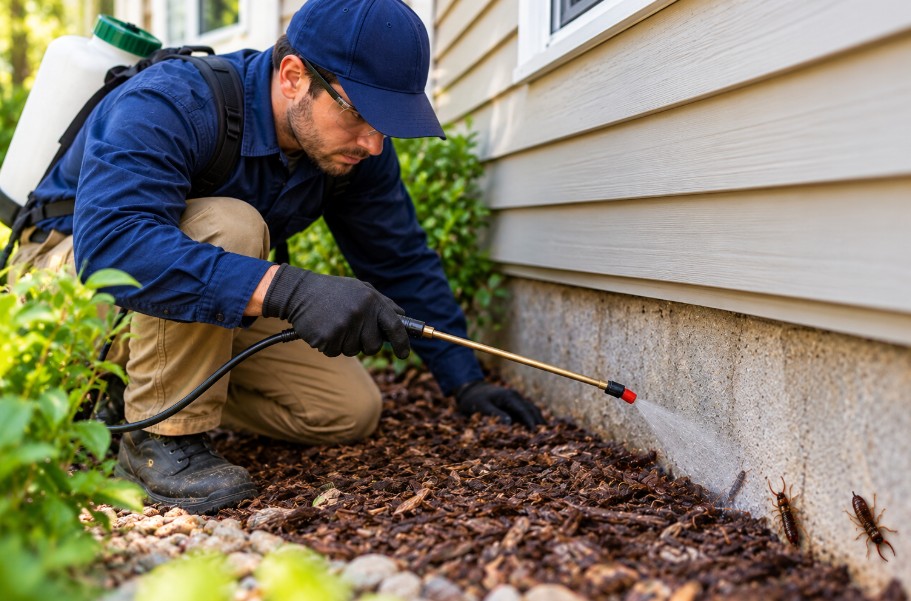
Earwigs look far scarier than they are, but nobody wants them in the dish rack or under the bath mat. They live outdoors in damp mulch and soil and slip inside when the weather swings too dry or too cold. We treat the ground they're coming from, seal the gaps they're using, and point out the moisture that's guiding them to your door.
The Doormat Surprise
Most people meet earwigs the same way. You lift the welcome mat, move a potted plant on the porch or pull back a bath rug, and a dozen dark, shiny insects with pincers on their rear ends scatter in every direction. Sometimes it's just one, sitting in the kitchen sink at 6 a.m.
A few earwigs that wander in and die are a nuisance, not an emergency. But if you're finding them every morning, in several rooms, or in a basement or garage that stays damp, there's a large population living right against your house. That's when it makes sense to have someone look.
Call us, and we'll typically have a licensed technician knocking within an hour, anywhere in the city.
Call (743) 228-3678Why Earwigs Have Been Showing Up Indoors in 2026
That matters for earwigs. They need cool, moist hiding places, and NC State Extension notes they sometimes move indoors during hot, dry weather. When mulch beds and lawns bake, the damp places left are often your crawl space, the soil under the AC condensate line, the area around a leaky hose bib and the inside of your house. Every one of those can become an earwig refuge.
Then comes fall. Greensboro's average first freeze at Piedmont Triad International Airport arrives around October 28, according to WFMY News 2, and NC State Extension's frost table lists November 4 for the Greensboro water treatment plant station.
Cold nights push the last active earwigs toward warmth, right when many of us carry porch ferns, herbs and potted plants indoors for the winter. Clemson Cooperative Extension specifically links indoor earwigs to houseplants brought in from outside.
Earwigs Through a Greensboro Year
Earwigs follow moisture and temperature, and Greensboro's normal rainfall has a pattern. This table pairs NOAA's 1991–2020 averages for the city with what earwigs are doing in each season.
| Season | Normal rainfall (NOAA, 1991–2020) | What earwigs are doing |
|---|---|---|
|
Spring (Mar–May)
|
About 11 inches | Mating happens in spring. Females dig small chambers in the top few inches of soil and guard their eggs. |
|
Summer (Jun–Aug)
|
About 12.6 inches (wettest stretch) | Populations build in damp mulch and garden beds. Dry spells in between push them toward foundations and indoors. |
|
Fall (Sep–Nov)
|
About 10.9 inches (Sep: 4.59 in, Oct: 3.05 in) | Wet September, dry October: earwigs come indoors, and potted plants carried in before the first freeze bring stowaways. |
|
Winter (Dec–Feb)
|
About 9.4 inches | Adults and eggs overwinter in the soil below the frost line. Indoor sightings drop off. |
Which Earwigs Live Here?
NC State Extension names two earwigs as the most common in North Carolina. A third shows up across the Southeast.
Ringlegged Earwig
Euborellia annulipesEuropean Earwig
Forficula auriculariaStriped Earwig
Labidura ripariaA Short Earwig Life
Clemson counts 28 earwig species in the United States. Females lay 30 to 50 eggs per batch, can lay several batches, and clean the eggs constantly to keep mold off them.
The young take two to three months to reach adulthood, and adults can live up to seven months. Young earwigs look like small, pale adults, white to olive-green with no wings (NC State), so spotting them near your house means a nest is close by.
Earwig or Look-Alike?
Before treating, it pays to confirm what insect you have on your hands. Several common Greensboro pests share similar shapes or damp habitats.
| Insect | How to tell it apart |
|---|---|
|
Primary Target
Earwig
|
Flat, shiny, brown to black, with a pair of pincers on the tail. |
|
Rove beetle
|
Similar slim shape and short wing covers, and often curls its tail up, but has no pincers. |
| Silvery, scaly and tapered, with three bristly tails instead of pincers. | |
|
Cockroach nymph
|
Wider, oval body with long antennae and no pincers. |
How Earwigs Got Here and Where the Name Came From
There's no particular earwig story in Greensboro's history, but the two common species are both immigrants.
The Ringlegged Earwig (Euborellia annulipes)
Probably originated in Europe and was first found in the United States in 1884, according to the University of Florida. It is now thoroughly established across the South, thriving in North Carolina's warm, humid summers and damp foundation mulch.
The European Earwig (Forficula auricularia)
First recorded in the U.S. in Seattle in 1907, then spread across Oregon, Rhode Island, New York, and California over the next 16 years. Most northern states had established populations by the 1930s and 1940s, and it now reaches south into North Carolina and the Piedmont.
Debunking the "Ear-Boring" Superstition
The name comes from an old European superstition that earwigs crawl into a sleeping person's ear and bore into the brain. NC State Extension says plainly that this isn't true. Earwigs hide in tight, dark, damp gaps, and a human ear is not one they seek out. They have no anatomical mechanism to bore through bone or brain tissue, and pose zero neurological risk to humans or pets.
Earwigs in the Garden: Helpers or Pests?
Earwigs are omnivores, and that makes them a mixed bag in a Greensboro backyard.
The Good Side
They eat aphids, mites, insect eggs and other small garden pests. If you have them in small numbers in a shrub border or vegetable garden away from the foundation, they're doing more good than harm.
The Bad Side
They chew jagged holes in flowers, vegetable leaves and soft fruit, especially dahlias, marigolds, hostas, lettuce, strawberries and peaches. Seedlings take the hardest hit. They feed at night, so by morning you see the chewed leaves but not the bug that did it.
Earwig vs. Slug Damage
The sign it's earwigs and not slugs: Earwig feeding leaves ragged, jagged holes with no slimy trails. Slugs leave unmistakable silver trails across the leaves and surrounding soil.
Earwig Problems Across Greensboro Neighborhoods
Where earwigs build up depends on how much damp organic material sits around the foundation.
Fisher Park, Westerwood and Sunset Hills
Mature oak and maple canopies drop heavy leaf cover every fall. Shaded brick foundations, stone borders, thick ground cover and old wood mulch stay moist for days after a rain, creating ideal breeding ground along the house.
Old Irvington and Hamilton Lakes
Heavily landscaped yards, lake moisture, dense English ivy and irrigation systems that run in the early morning keep soil damp right up to the slab or crawl space wall.
Latham Park, Lake Daniel and Greenway Neighborhoods
Homes backing onto creeks, greenways and drainage easements see earwigs migrating out of the creek bed during dry spells in July and August, heading directly for watered foundation beds.
Summerfield, Oak Ridge and Northern Guilford County
Well-watered garden beds, mulch rings around young trees, gravel paths over weed barrier and firewood stacks against the house hold moisture through summer heat.
Slab Homes in Adams Farm and Newer Subdivisions
Mulch beds pushed directly against slab foundations give earwigs an easy route under weep screeds and exterior doors, especially where grade doesn't slope away cleanly.
What Professional Earwig Control Looks Like
Exterior-First Treatment Methodology
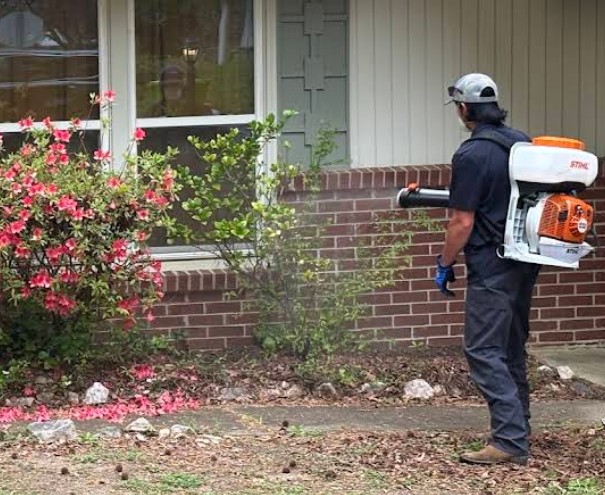
Earwig control that works happens outside. If you only spray baseboards indoors, you're killing the few that already made a mistake while thousands more live in the mulch two feet away. Our protocol eliminates the breeding epicenter before insects breach your threshold.
Foundation Band Treatment
We apply a liquid residual barrier to the exterior foundation wall (typically 2 to 3 feet up) and the soil or mulch bed (typically 3 to 5 feet out) around the entire perimeter. When earwigs crawl across this treated zone at night, they pick up the material and die before reaching the house.
Mulch and Moisture Zone Granular Baiting
In heavy mulch beds, leaf litter, compost piles and low-lying ground where liquid sprays can't penetrate deeply, we apply a moisture-resistant granular bait or granular insecticide that settles into the lower, damp layer where earwigs spend the daytime.
Crawl Space Perimeter and Vent Inspection
Greensboro crawl spaces are earwig magnets. We check crawl space vents, foundation access doors and sill plates for gaps and moisture, treating the exterior perimeter of the vents and any damp zones beneath.
Entry Point Sealing and Gap Identification
We inspect door sweeps, weatherstripping, pipe penetrations, dryer vents and weep holes, sealing small gaps and showing you where weatherstripping needs replacement.
Indoor Targeted Crack-and-Crevice Treatment
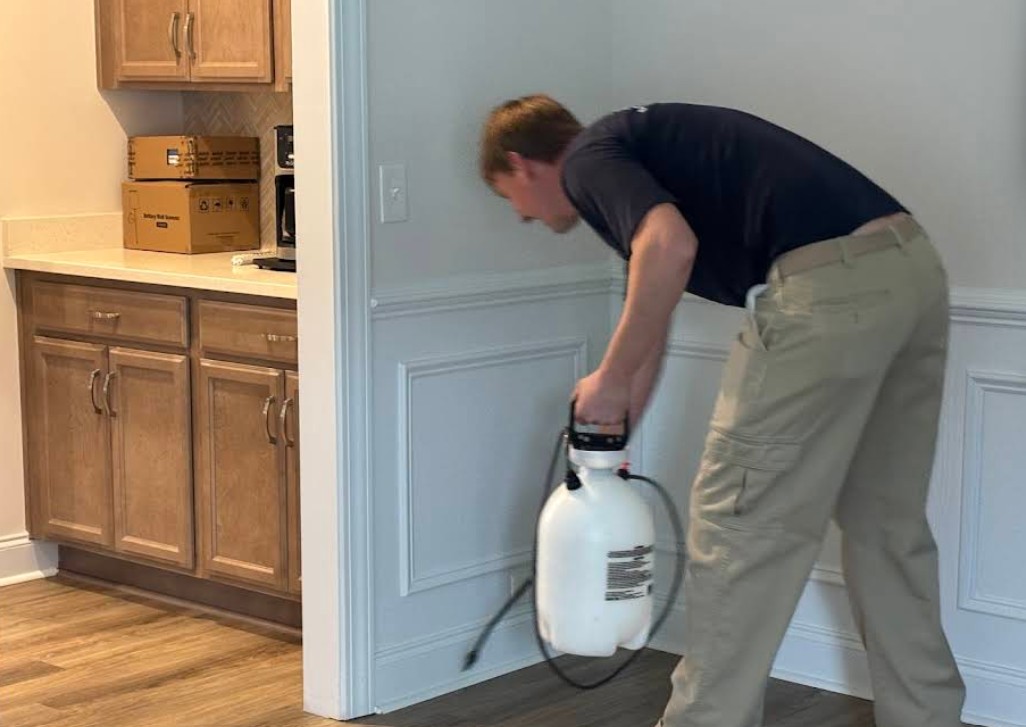
If earwigs are already established inside, we don't broadcast spray living areas. We use targeted applications in the specific damp harborage spots: under washing machines, behind baseboards in laundry rooms and bathrooms, inside sump basins, and in unfinished basement corners.
Garden and Flower Bed Advice
We identify the plants taking damage and recommend watering adjustments, mulch pullback distances and targeted garden-safe options that protect your hostas and dahlias without wiping out beneficial pollinators.
Moisture Source Correction
We point out the specific conditions driving the problem: downspouts emptying next to the foundation, AC condensate lines dripping onto bare soil, over-irrigated zones, and mulch piled against siding.
Follow-Up and Guarantee
Earwig pressure usually settles down within a couple of weeks once the perimeter is treated and the damp areas dry out. If they don't, we come back.