
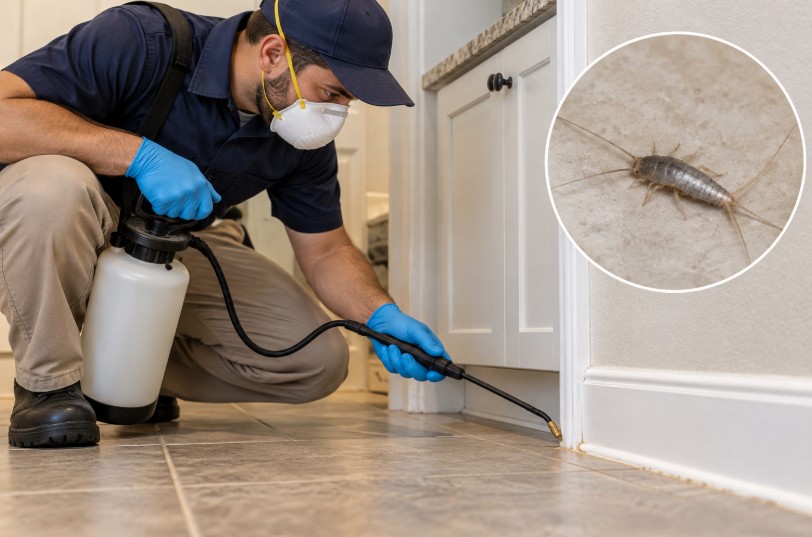
Silverfish Control in Greensboro, NC — Dry Out the Problem for Good
Silverfish don't bite and they don't spread disease, but they quietly chew through books, photos, wallpaper and stored clothes, and they're a reliable sign that part of your home is too damp. We treat the silverfish you have, find the moisture that's supporting them, and help you protect the things they like to eat.
A Greensboro team that understands humid summers, crawl spaces and old houses.
What Our Silverfish Service Covers:
-
Positive ID: silverfish, firebrat or a look-alike
-
Monitoring traps to find where they're actually living
-
Baits, dusts and targeted treatment in hiding places
-
A plain-language moisture report for your home
That Silver Flash in the Bathroom at Night
You flip on the bathroom light at 2 a.m. and something small, silver and fast wriggles across the floor and disappears under the baseboard. That's usually how people meet their first silverfish.
One silverfish isn't an emergency. But they're secretive and long-lived, so the one you see is rarely the only one. If you're spotting them regularly, finding chewed paper or seeing them in more than one room, it's worth having someone look.
Silverfish Are a Humidity Gauge
Here's the single most useful thing to know about silverfish: they need damp air to survive.
Relative Humidity Preference
Ohio State University Extension notes silverfish prefer 75 to 95 percent relative humidity. Without ambient moisture, their delicate scales desicate and nymphs cannot survive.
Preferred Harborage Zones
NC State Extension describes them as insects of cool, damp places like bathrooms, basements and bookshelves, where condensation forms on plaster and masonry.
Adult Life Span
They can live a surprisingly long time. Both NC State and Ohio State put adult life spans at two to eight years, and they can go months without food.
The Advanced Energy Crawl Space Study: Why Greensboro Homes Stay Damp
So where does a Greensboro house get that humid? Start underneath it. In a well-known North Carolina field study by Advanced Energy, researchers compared vented and closed crawl spaces in identical homes. Relative humidity in the traditional wall-vented crawl spaces stayed above 80% for most of the spring and summer, while the closed crawl spaces stayed below 65%. Many older Greensboro homes sit on exactly that kind of vented crawl space.
A Moisture Map of a Greensboro House
When we inspect for silverfish, we're really following the humidity. These are the places we check, from the ground up:
Crawl space
Vented crawl spaces pull in muggy summer air that condenses on cooler surfaces. Missing or torn vapor barriers, standing water after storms and our slow-draining clay soil all make it worse. Silverfish move up from here through plumbing and wiring holes.
Bathrooms
Steam with no working exhaust fan, damp bath mats, leaky tub surrounds and gaps where pipes come through the wall. This is where most people see them.
Kitchen and laundry
Under-sink cabinets with slow drips, behind the dishwasher and washing machine, and dryer vents that leak humid air indoors.
Basements
Older in-town homes with partial basements often have damp masonry walls and stored boxes sitting on the floor.
Closets and bookshelves on outside walls
Still air, cool wall surfaces and plenty of paper and fabric. Silverfish can feed here for years without being noticed.
Attic
Hot attics are firebrat territory, and silverfish live in and under insulation, especially around bath fan ducts that vent into the attic instead of outdoors. Cardboard boxes of keepsakes stored up there are an easy meal.
Garage and storage rooms
Cardboard, old magazines, holiday decorations and anything stored in a space that isn't heated or cooled.
Silverfish, Firebrat or Something Else?
Knowing which bristletail or look-alike you have guides where we treat and what moisture source to fix:
Silverfish
Lepisma saccharinumAbout ½ to ¾ inch long, carrot-shaped, covered in silvery-gray scales, with two long antennae and three tail-like bristles at the back. They move with a wriggling, fish-like motion and prefer cool, damp spots.
Firebrats
Thermobia domesticaThe same shape but mottled brown and gray, about ½ inch long. NC State Extension notes they prefer temperatures of 90°F and above, so they turn up near water heaters, furnaces, fireplaces, ovens and in summer attics. Both are sometimes called bristletails.
Common Greensboro Look-Alikes:
House centipedes
Have many long legs and move very fast. They actually hunt silverfish, so seeing centipedes often means there's prey around.
Earwigs
Darker with pincers at the rear, and usually come in from mulch and damp soil outdoors.
Carpet beetle larvae
Small, brown and bristly, and they damage wool and other animal-based fabrics.
Booklice
Tiny, pale and soft-bodied, and show up on damp books and cardboard where mold is growing.
What Silverfish Eat: Your Paper Trail
Silverfish feed on starches, sugars and some proteins, which covers a surprising amount of what's in a house.
Household Items at Risk:
Especially older volumes with traditional starch-based animal glues in the bindings and spines.
Certificates, deeds, diplomas, stamps, trading cards and precious archival photo albums.
Wallpaper surfaces and the starch-rich cellulose paste hidden directly behind the seams.
Cardboard moving boxes, grocery bags and corrugated packaging stored in damp rooms.
Cotton, linen, rayon and starched fabrics, plus stored heirloom quilts and fine table linens.
Flour, cereal, dry oats and open bags of dry pet food stored in pantries and utility rooms.
Natural glues used inside antique furniture joinery, picture frames, and book spine backing.
Greensboro's Textile Roots in Your Attic
Greensboro grew up as a textile town, and plenty of local attics hold boxes of inherited linens, quilts, yearbooks and family papers. Those are exactly the things silverfish damage slowly over years.
Signs of Silverfish Damage
Inspect your stored belongings for these unmistakable signatures of active bristletail feeding:
UC's Statewide Integrated Pest Management program notes silverfish scrape paper surfaces with their rasping mouthparts more than they bite clean through it.
Ragged, irregular nibbles along outer book page margins, wallpaper borders, and cloth folds.
Faint yellow discoloration left behind on aged book pages, wallpaper seams, or linen fibers.
Microscopic metallic dust and shed nymph exuviae collecting in drawers, boxes, and along shelf edges.
Distinctive dark fecal droppings resembling ground pepper deposited where insects feed actively.
How Silverfish Got Into Your Home
Silverfish rarely wander across the threshold on their own without an underlying harborage or transit vector:
In boxes and books
They ride in with cardboard boxes, used books, stored papers and secondhand furniture brought home from estate sales or storage units.
With building materials
UC's pest management program notes they can arrive on damp lumber, wallboard and similar materials during residential construction and remodeling.
From outside
During hot, dry Piedmont stretches, silverfish living in mulch, leaf litter and under tree bark move toward damper spots, including your foundation and crawl space vents.
From next door
In Greensboro apartments, townhomes and duplexes, they travel effortlessly along shared plumbing wall chases and unsealed pipe pass-throughs.
Why new homes get them too
Brand-new houses hold a lot of moisture for the first year or two as lumber, drywall compound, paint and concrete dry out. Add stacks of moving boxes, and newer neighborhoods on the city's north, west and southwest sides can see silverfish as often as older ones.
Why older homes keep them
In Greensboro's early-1900s neighborhoods, damp crawl spaces and basements, original plaster and wallpaper, bookshelves full of older volumes and decades of stored belongings give silverfish everything they need. Mid-century brick ranches add vented crawl spaces with tired vapor barriers and bathrooms that were often built without exhaust fans.
How Our Silverfish Service Works
A methodical six-step protocol addressing active insects, hidden harborage voids, and foundational humidity simultaneously:
We get there fast
Our one-hour response applies citywide, whether you're near downtown or out by the lakes.
We identify and inspect
We confirm the insect, then check the damp areas on the moisture map above, including the crawl space and attic when they're accessible. We look for live insects, scales, droppings and feeding damage.
We place monitors
NC State Extension recommends sticky traps to find silverfish "hot spots." We set them in bathrooms, closets, under sinks, near bookshelves and in storage areas to learn where activity is heaviest.
We treat where they hide
Depending on what our inspection uncovers, targeted treatment can include:
We report on moisture
You'll get a short, plain list of the damp conditions we found and what would fix each one, from a bathroom fan to a crawl space vapor barrier.
We follow up
Ohio State Extension notes it can take 10 to 14 days to see control after treatment, and silverfish live for years, so we re-check the monitors and adjust until activity drops and stays down.
Why Foggers and Sprays Disappoint
Most people who try to get rid of silverfish start with a fogger or a can of spray. Here's why that rarely works:
Foggers don't reach them
NC State Extension says fogging rarely works on silverfish because the aerosol chemical doesn't get beneath insulation or into the deep structural cracks where they hide.
Surface sprays miss the source
Silverfish spend their days sheltered deep inside wall voids, under fiberglass insulation, and behind subfloor baseboards where surface droplets never penetrate.
They outlast it
An insect that can live for 2 to 8 years and go months without a meal will easily outwait a temporary residual spray deposit.
The humidity is still there
If the bathroom still steams up without adequate ventilation and the crawl space still sits at 80% humidity, new silverfish move right back in.
What Affects the Cost of Silverfish Control
Every home and humidity profile is different. Here are the core variables that shape treatment scope and investment:
Spread of Activity
How widespread the activity is, from a localized pocket behind one bathroom vanity to an established population across the whole house.
Attic & Crawl Space Access
Whether the attic rafters and crawl space sub-flooring need specialized void dusts, power dusting, or perimeter barrier treatment.
Size & Layout of the Home
Total square footage, number of stories, presence of multiple bathrooms, and complexity of plumbing wall voids requiring treatment.
Follow-Up Visits Required
Follow-up visits needed to bring a long-running infestation down, monitor sticky trap catch rates, and break lingering reproductive cycles.
Moisture Corrections
Physical moisture corrections (fixing pipe leaks, crawl space vapor barriers, or installing bath exhaust fans), which are usually separate from pest treatment.
Service Frequency
Whether you choose a one-time targeted corrective service or an ongoing recurring seasonal protection plan to keep numbers down permanently.
Protecting Books, Photos and Keepsakes
Practical preventive adjustments homeowners can make right now to protect irreplaceable papers, family memories, and heirlooms:
Move valuables out of unconditioned attics, damp basements, garages and crawl spaces into living areas that are heated and cooled year-round.
Swap cardboard boxes for plastic bins with tight lids. NC State Extension recommends airtight plastic bags or sealable containers for items you want to protect.
Store family photos and historical documents in acid-free archival sleeves or boxes, kept elevated on shelving away from floor level.
Leave a little space behind books on shelves that sit against outside walls for air circulation, and dust the volumes a few times a year.
Clean and fully dry linens, quilts, vintage lace and stored clothing before packing them away, removing residual starch and body soils.
Go through old magazines, newspaper stacks and paper grocery bags, and recycle what you don't need to eliminate prime silverfish harborage.
Thoroughly inspect secondhand books, vintage furniture, estate sale finds and moving boxes before bringing them across your doorstep.
Silverfish Through the Greensboro Year
How the Piedmont’s climate rhythms influence silverfish movement, breeding, and indoor behavior through all four seasons:
Peak Humidity & Activity
Humidity peaks, crawl spaces and bathrooms stay damp, and silverfish are most active. Hot attics favor firebrats as temperatures soar above 90°F.
Storage Influx & Open Windows
As air conditioning runs less and windows open, indoor humidity can climb. Boxes of holiday decorations come out of storage, sometimes with passengers.
Microclimate Sanctuaries
Heated bathrooms, kitchens and laundry rooms stay warm and humid enough for silverfish to remain active indoors all winter long.
Rain, Drainage & Cycle Reset
Rain and rising humidity start the cycle again. It's a prime time to check the crawl space and fix exterior drainage before summer arrives.
Libraries, Offices, Churches and Storage
Silverfish do the most expensive damage where paper is stored for a long time. We work with:
Collection-Safe Protocols: For these properties, we set up continuous monitoring programs and treat in ways that keep products safely away from the collections themselves.
Licensed, Insured and Close By
North Carolina regulates silverfish work as household pest control under its structural pest control program, and our technicians are trained and credentialed under it. Our liability insurance covers every visit.
We work from 200 N Greene St and serve homes and businesses across Greensboro. Older crawl-space neighborhoods, damp in-town basements and newly built subdivisions that are still drying out each call for a slightly different plan, and we build ours around the house in front of us.
Frequently Asked Questions About Silverfish Control in Greensboro
Clear, factual answers from licensed Piedmont pest technicians on silverfish habits, moisture physics, property protection, and treatment safety.
Q1 Are silverfish harmful to people or pets?
No. They don't bite or sting and aren't known to spread disease. The real harm is to belongings: books, papers, photos, wallpaper and fabrics.
Q2 Does having silverfish mean my house is dirty?
No. It means some part of the house is damp. Clean homes with humid bathrooms or crawl spaces get silverfish all the time.
Q3 How soon will the silverfish be gone?
You'll usually see fewer within a couple of weeks. Because they live for years and hide deep in the structure, complete control can take a few months and depends heavily on lowering humidity.
Q4 Why do I only see them at night?
Silverfish avoid light and hide in cracks during the day. Seeing them in daytime can mean a larger population.
Q5 I found one in the bathtub. Did it come up the drain?
Probably not. Silverfish can't climb smooth surfaces well, so they fall into tubs and sinks and get trapped.
Q6 Will a dehumidifier get rid of silverfish by itself?
It helps a lot and may be enough for a light problem. For an established infestation, drying things out works best alongside baits and dusts in the places they hide.
Q7 Are your silverfish treatments safe for kids and pets?
Treatment goes into cracks, wall voids, attics and other out-of-the-way spots, and every product is EPA-registered and applied the way its label requires. We'll explain any precautions before we start.
Q8 Why do I have silverfish in a brand-new house?
New homes hold construction moisture for a year or two, and silverfish often arrive in building materials and moving boxes. Activity usually drops as the house dries out, and treatment speeds that along.
Q9 What's the difference between silverfish and firebrats?
They're close relatives. Silverfish are silvery and like cool, damp places. Firebrats are mottled brown and like heat, so they're found near water heaters, furnaces and in hot attics.
Q10 Do you treat commercial buildings?
Yes. We handle offices, churches, libraries, storage facilities and apartment communities, with monitoring programs built around paper and fabric storage.