
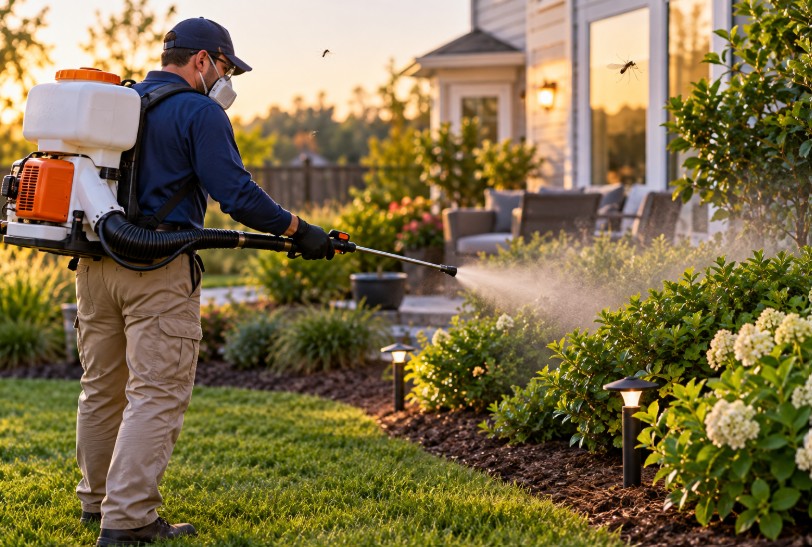
Mosquito Control in Greensboro, NC
Greensboro summers are long, humid and full of rain, and the mosquitoes know it. We find where they're breeding on your property, treat the shady spots where they rest, and come back on a schedule that matches their life cycle, so your deck, patio and play set are usable again from spring until the first frost.
Real reduction, honest expectations, and a team that lives with the same mosquitoes you do.
Licensed for outdoor mosquito work
NC certified structural & outdoor pest professionals
Fully insured
Comprehensive liability protection on every visit
Breeding sites first, spraying second
Target standing water and larvae habitats before barrier treatment
Pollinator-aware treatment
Targeted application avoiding flowering plants and beneficial insects
Rotated products to fight resistance
Multi-mode active ingredients prevent mosquito tolerance
Service through the whole season
Recurring protection scheduled from spring through first frost
The Honest Truth About Mosquito Control
Let's start with something most mosquito companies won't put on their website: nobody can make a Greensboro yard 100% mosquito-free. Mosquitoes fly in from neighboring yards, storm drains and creeks, and a heavy week of rain can hatch a new wave overnight.
What Professional Mosquito Control Really Does
What good mosquito pest control can do is cut the numbers down dramatically, so you can sit on the porch after dinner, let the kids play in the afternoon and grill without swatting. We get there by removing and treating the water mosquitoes breed in, treating the leaves and shade where adults rest, and returning often enough to stay ahead of each new generation.
When you contact Greensboro Insect Pros, a licensed technician can be at your door within 60 minutes, anywhere in the city. That matters when a birthday party is tomorrow or the yard is suddenly swarming after a storm. It also means you're talking to people who live here and swat the same mosquitoes you do.
Meet the Mosquitoes in Your Greensboro Yard
Not all mosquitoes behave the same way, and the kind biting you changes how we treat.
Asian Tiger Mosquito
This is the mosquito behind most daytime backyard complaints in the Triad. It doesn't fly far, which means the ones biting you usually hatched on your property or right next door. That's good news, because it means work in your own yard makes a real difference.
House Mosquitoes (Culex)
NC health officials list house mosquitoes among the primary carriers of West Nile virus, and they're the ones buzzing around your ears after dark on the patio.
Eastern Treehole Mosquito
It is the main carrier of La Crosse virus in North Carolina. La Crosse cases are concentrated in western NC, but wooded Greensboro lots with mature hardwoods offer the exact same breeding spots, so we check tree holes on every visit.
A Walk Around Your Yard: What We Check on Every Visit
Guilford County Environmental Health Warning: Mosquitoes can complete their life cycle and breed in as little as two teaspoons of stagnant water.
With that in mind, here is the exact 15-point inspection route a Greensboro Insect Pros licensed technician takes around your property on every single visit.
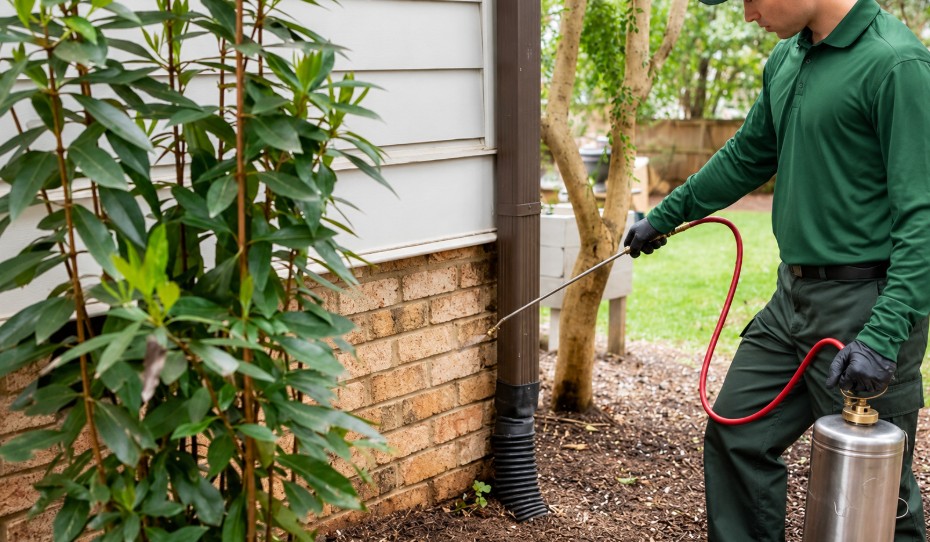
Out Front & Entryway
Leaf-packed gutters under big oaks and maples hold water for weeks, and they're one of the most overlooked breeding spots in older Greensboro neighborhoods.
The black corrugated pipe many homes use to carry water away from the foundation traps water in every single ridge. We check ends and low spots.
Pots, decorative urns and planters on the front porch, stairs and steps that retain excess irrigation.
Depressions in the lawn and driveway edges where Piedmont red clay soil prevents drainage and keeps puddles for days after rain.
Along the Sides of the House
Lines that constantly drip condensation into the same patch of shaded ground all summer long.
Outdoor municipal bins, especially indented lids and open rims that collect rainwater.
Subgrade wells and foundation vents that hold stagnant water following Triad storms.
Stacked pots, buckets, wheelbarrows and garden equipment stored upright against the side walls.
In the Backyard & Perimeter
Liriope, English ivy and thick bushes where adult mosquitoes rest during high heat.
The dark, damp undersides of elevated decks and the shaded sides of privacy fences.
Birdbaths, stagnant fountains and non-circulating ornamental garden basins.
Kids' play sets, plastic toys, sandbox covers, folds in tarps and pool covers.
Cavities in older oak, maple and hardwood trees and rotting stump pockets.
Spare tires, stored boat hulls, and sagging seams in outdoor grill covers.
Natural runoff swales and retention borders where standing water gathers.
Our Treatment Promise: We dump what can be dumped, treat standing water that cannot be removed using biological larvicides, and point out long-term property fixes you can make yourself. Most homeowners are surprised by at least one hidden spot they never noticed.
What a Mosquito Visit Looks Like
A methodical, multi-step process engineered around mosquito biology rather than mindless spraying.
First visit & Property Audit
A technician walks the whole property using the 15-point route, empties or treats breeding water, and identifies the areas where mosquitoes rest. You'll get a short list of the breeding sources we found and what can be done about each one.
Targeted Barrier Treatment
We apply a residual treatment to the places adult mosquitoes rest: the undersides of leaves on shrubs and hedges, dense ground cover, shaded fence lines, under decks and around outdoor living areas. We don't blanket open lawn, because mosquitoes don't rest in short grass in the sun.
Larvicide Application
Water that can't be dumped, such as a drainage low spot, a decorative pond without fish or a rain barrel, is treated with a larvicide that stops mosquito larvae from becoming biting adults.
After We Leave (~30 Mins)
Most treatments dry within about 30 minutes. Keep kids and pets off treated areas until then, and your technician will tell you the exact drying time for your visit.
Next Visit & Life-Cycle Timing
In peak summer heat, a mosquito can go from egg to biting adult in about a week to 10 days. That's why we return roughly every three to four weeks through the season rather than treating once and hoping for the best.
Our Treatment Toolbox
We use specialized, EPA-registered products tailored specifically for Piedmont NC landscapes, rotating active ingredients to prevent resistant strains.
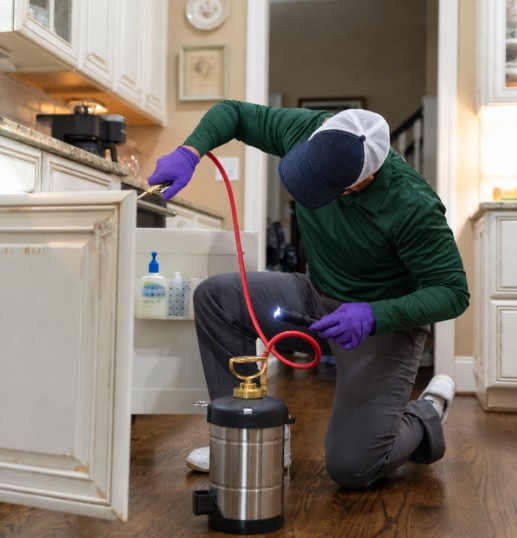
Residual Barrier Treatment
A targeted application to resting areas that bonds to vegetation and continues working for weeks through rain and summer heat. This is the structural backbone of most backyard programs.
Larvicides & Bti Dunks
Products such as Bti (a naturally occurring soil bacterium that targets mosquito larvae) and insect growth regulators that stop larvae from developing into adults. NC State Extension notes Bti dunks work exceptionally well for small bodies of water and last about 30 days.
Rotating Products to Beat Resistance
This one matters more every year. NC State University researchers tracking Asian tiger mosquitoes in Wake County found no resistance in 2016–2017, but by 2023 resistance mutations to pyrethroids, the most common backyard spray ingredients, showed up on 84% of the residential blocks they sampled.
Plant-Based & Botanical Options
For homeowners who prefer them, we offer botanical treatment options made from essential oils like cedar, lemongrass, and rosemary. They generally need more frequent visits to hold up, and we'll explain the trade-off honestly up front.
Event Treatments
A one-time treatment timed a day or two before an outdoor wedding, graduation party, cookout, birthday or family reunion to keep guests comfortable and bite-free.
Protecting Bees, Fish and Greensboro's Drinking Water
Mosquito treatments done carelessly can harm the things that make a yard worth enjoying. We take these precautions seriously.
Pollinators & Bees
We avoid treating plants in bloom, focus strictly on the undersides of foliage and shaded resting zones rather than flowers, and follow every EPA label restriction written to protect bees. If you or a neighbor keeps honeybees, tell us and we'll map and plan around the hives.
Fish, Ponds & Aquatic Life
Many common adult mosquito products are toxic to fish and aquatic organisms. We keep adult barrier sprays completely away from koi ponds, creeks, and ornamental water features, and use larvicides labeled for water only where they belong.
Greensboro Lake Watersheds
Greensboro's drinking water comes from Lake Brandt, Lake Higgins and Lake Townsend, and properties in those watersheds sit inside protected water-supply areas. On homes near the lakes, Reedy Fork, Horsepen Creek or Buffalo Creek tributaries, we lean heavily on source reduction, biological larvicides and careful targeting to keep products out of runoff.
Zero-Drift Neighbor Policy
NC State Extension points out that pesticide drift onto a neighboring property isn't allowed, no matter how small. We don't treat on windy days, calibrate nozzle pressure precisely, and keep every application strictly inside your property line.
Why Greensboro Has So Many Mosquitoes
The Triad's geography, clay soils, and extended warm seasons create ideal breeding grounds.
Rain Nearly Every Week
Greensboro averages about 45 inches of rain a year, spread across the whole season, which keeps refilling outdoor containers, gutters and lawn low spots.
Clay That Won't Drain
Our dense red Piedmont clay holds standing puddles for days after storms—plenty of time for a fresh batch of mosquito larvae to develop.
Heat and Humidity
July highs average near 89°F with muggy, humid nights, which dramatically accelerates every stage of the mosquito life cycle.
Lots of Mature Shade
Mature tree canopies over established neighborhoods give adult mosquitoes cool, damp, sheltered foliage to rest in through the afternoon heat.
Water Everywhere
City reservoirs, Lake Jeanette, the Buffalo Creek and Reedy Fork systems, greenways, and wet detention ponds in newer subdivisions place water close to homes.
Subterranean Storm Drains
Catch basins along city streets hold leaf-rich water long after storms pass, creating prime hidden habitat for house mosquitoes that bite at night.
A 7-Month Long Breeding Season
The average last spring frost in Greensboro falls in early April, and the first fall frost arrives around the end of October—giving local mosquitoes roughly seven continuous months of prime breeding weather.
Different Parts of Town, Different Mosquito Problems
How tree canopy, drainage age, and water proximity shape mosquito pressure across Greensboro neighborhoods.
Near the Lakes — Lake Jeanette, Lake Brandt, Lake Higgins, Lake Townsend, Summerfield & Oak Ridge
Big wooded lots, creek edges and lake shorelines mean pressure from every direction. We focus heavily on resting areas and biological larviciding, taking extra care near protected water reservoirs.
Historic In-Town — Fisher Park, Westerwood, College Hill & Irving Park
Towering old trees, deep shade, tree rot holes and gutters packed with leaf debris. Asian tiger mosquitoes thrive here, breeding in gutters and plant saucers hidden in dense landscaping.
Mid-Century Neighborhoods — Starmount, Lindley Park & Hamilton Lakes
Mature shade, dense foundation plantings and older yard drainage. Greenway and creek corridors add heavy mosquito pressure along the back property lines.
Newer Subdivisions — Brassfield, Adams Farm & Grandover
Wet retention ponds, automated irrigation, corrugated downspout extensions and fresh mulch beds. We pay close attention to irrigation overspray zones and neighborhood ponds.
Apartments, HOAs & Commercial Properties
Pool decks, playgrounds, dog parks, restaurant outdoor patios and daycare play areas. We set up scheduled recurring programs for HOAs and property managers, coordinating visits around residents and peak customer hours.
Your Greensboro Mosquito Season, Month by Month
What mosquitoes are doing in your yard each month, and how our treatment calendar counters them.
| Month | What's Happening in the Yard | What We're Doing |
|---|---|---|
| March | Warm spells start waking things up; overwintered eggs sit in dry containers. | Pre-season walk-throughs, gutter cleaning audits, and container disposal. |
| April | Spring rain floods containers and eggs start hatching; average last frost passes in early April. | First barrier and biological larvicide treatments of the season. |
| May | Asian tiger mosquitoes become noticeably active and aggressive during the day. | Regular recurring treatment schedule begins across all resting zones. |
| June–July | High heat speeds up life cycles; frequent afternoon thunderstorms refill standing water. | Visits every 3–4 weeks, rotated product classes, and extra larviciding after heavy rains. |
| August | Peak mosquito numbers. In 2024, North Carolina's West Nile virus cases peaked in August. | Intensive inspection of storm drains, detention ponds, and shaded resting areas. |
| September | Still warm and humid; still peak mosquito season across the Piedmont. | Keep the schedule going without stopping early; maintain protective barriers. |
| October | Numbers drop as nights cool; average first frost arrives around late October. | Final protective treatments of the year and a comprehensive fall cleanup checklist. |
| Nov–Feb | Adults die off, but Asian tiger mosquito eggs wait out the winter in dry containers. | Remove and store dry containers so next spring starts with lower baseline numbers. |
Why This Isn't Just About Itchy Ankles
Most bites are only a nuisance. But mosquitoes in North Carolina can transmit serious viruses and parasites, and it's worth knowing the local data without panicking.
West Nile Virus
North Carolina recorded 27 West Nile cases in 2024—the highest count since the virus arrived in the state in 2002, with cases reported across all regions. While most infected people have mild or no symptoms, some develop serious neurological complications.
La Crosse Virus
North Carolina had 15 confirmed cases in 2024. Transmitted primarily by the Eastern treehole mosquito, young children are most at risk of developing severe pediatric encephalitis.
Eastern Equine Encephalitis (EEE)
Rare (with 1 NC case reported in 2024), but extremely serious when it occurs in humans or horses in marshland borders.
Your Pets & Heartworm Disease
Mosquitoes transmit heartworm microfilariae to dogs and cats, and veterinarians emphasize year-round medication. Reducing mosquitoes in your yard provides a crucial extra layer of safety.
Health Advisory: Even with a treated yard, use an EPA-registered repellent (such as DEET or Picaridin) when spending time in dense woods or near unmanaged water at dawn/dusk, and contact a physician promptly if you develop a high fever, severe headache, neck stiffness or confusion after mosquito bites.
What Affects the Cost of Mosquito Control
Every Greensboro property is unique. We price honestly after seeing the property based on what actually needs treatment:
Licenses: Why Your Mosquito Company Needs the Right One
Here's something many North Carolina homeowners don't know: In NC, treating mosquitoes in your yard for hire legally requires a Public Health pesticide license from the NC Department of Agriculture & Consumer Services (NCDA&CS).
NC State Extension's pesticide safety program notes that a standard structural pest control license—the kind used strictly for indoor household pests—does not cover mosquito applications away from a building. You don't need a permit to have your yard treated, but before you hire any mosquito exterminator, verify which North Carolina license covers their outdoor mosquito work on the official NCDA&CS public license registry.
Parties, Weddings and Special Events
Planning something outdoors? A targeted one-time event treatment keeps guests comfortable and protects outdoor celebrations from dusk biters.
We treat residential backyards, church grounds, wedding venues, country clubs, and community parks across Greensboro and Guilford County.
Zero-Disruption Event Protocols
Discreet applications timed precisely around event caterers, tent rentals, and floral setups.
Mosquito Myths We Hear All the Time
What the scientific research actually says about popular DIY repellents and gadgets:
"Citronella plants keep mosquitoes away."
The Reality: NC State Extension lists repellent plants among methods without scientific support. The repellent oils are locked inside the leaves—simply growing them in a pot on your deck does not emit enough vapor to protect a patio.
"A bug zapper will take care of it."
The Reality: Research cited by NC State Extension shows that less than 1% of insects killed by ultraviolet bug zappers are mosquitoes. They primarily electrocute harmless moths, beetles, and beneficial predatory insects.
"Those ultrasonic devices work."
The Reality: Electronic sound and high-frequency repellers have repeatedly failed controlled entomological trials and lack peer-reviewed scientific backing.
"Bats and purple martins will eat them all."
The Reality: While bats and birds eat many flying insects, mosquitoes make up only a tiny fraction of their natural diet—nowhere near enough to control an active backyard infestation.
"Spraying the open lawn gets rid of them."
The Reality: Adult mosquitoes rest in cool shade, underneath broadleaf shrubs and in thick foundation ivy—never in short, sunny grass. Blanketing open turf misses where they actually harbor during the day.
"If I treat once, I'm done for the summer."
The Reality: In Piedmont heat, a brand-new generation can hatch from rainwater within 7 to 10 days. Mosquito management requires a consistent, season-long treatment cycle to stay ahead of hatching waves.
Frequently Asked Questions
Clear answers on safety, weather, pollinator protection, treatment schedules, and honest expectations for mosquito management across the Piedmont.
Will my yard be completely mosquito-free?
No honest company can promise that. Mosquitoes fly in from neighboring properties, storm drains and wooded areas. What you should expect is a big, noticeable drop in mosquitoes, especially in the areas you use most.
How soon will I notice a difference?
Most homeowners notice fewer mosquitoes within a day or two of the first treatment. Results get steadier as regular visits and breeding-site removal break the life cycle.
How often do you come back?
Roughly every three to four weeks during the season, adjusted for heavy rain and the time of year.
Is it safe for my kids and pets?
We use EPA-registered products applied according to their labels. Keep kids and pets off treated areas until they're dry, usually about 30 minutes, and your technician will confirm the time.
What happens if it rains after a treatment?
Residual treatments are designed to hold up once dry. A heavy downpour right after application can reduce results, so let us know and we'll check in.
Will the treatment hurt bees and butterflies?
We avoid blooming plants, target leaves and shade where mosquitoes rest, and follow label directions that protect pollinators. If you keep bees or have a pollinator garden, tell us so we can plan around it.
I live on a pond or creek. Can you still help?
Yes. Properties near water get more focus on larvicides, resting-area treatments and careful targeting that keeps adult products out of the water.
Do you also treat for ticks?
Ticks rest in many of the same shady, leafy areas, and tick treatment can be added to your yard program. Ask your technician about it.
When should I start mosquito service?
Ideally in April, before populations build. Starting in the middle of summer still helps, it just takes a visit or two to get the numbers down.
Does the city spray for mosquitoes in residential yards?
Guilford County and the City of Greensboro handle public health surveillance and treat some municipal catch basins, but they don't do broad truck spraying across residential neighborhoods or private yards. They rely on residents and private services to manage standing water around homes. For your own yard, a combination of source reduction and targeted treatment is the most reliable option.
