
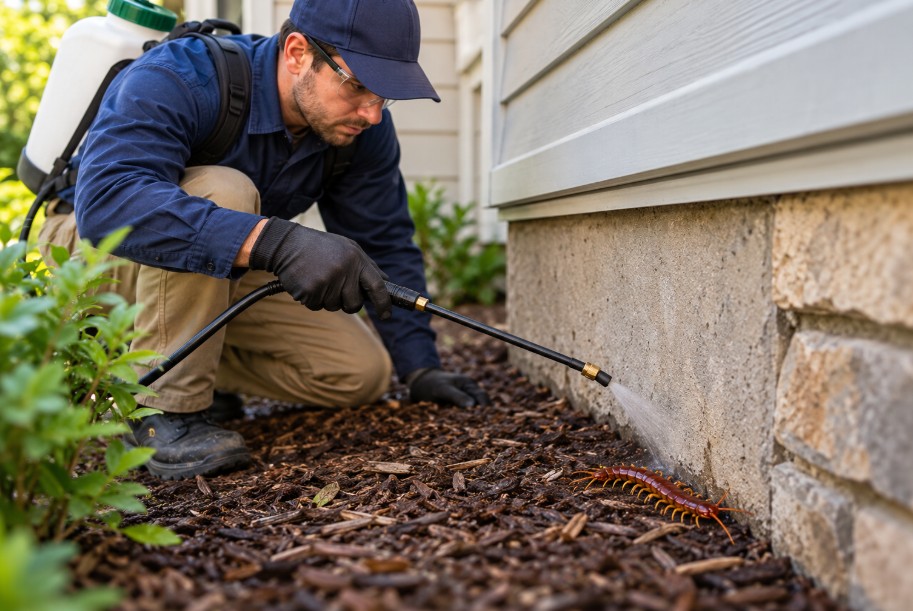
insect control technician spraying in greensboro home crawl space
House Centipedes · Crawl Space Moisture · Occasional Invaders

Centipede Control in Greensboro, NC — Fix What's Drawing Them In

A centipede racing across the bathroom floor is startling, but it's also a clue. Centipedes come indoors for two things: damp air and other bugs to eat. We clear out the centipedes, then deal with the moisture and the prey that brought them, so you're not seeing them again next month.

Call Now (743) 228-3678
A Greensboro insect control team working out of 200 N Greene St.
We treat the outside first, where centipedes actually come from
We look for the insects they're feeding on inside your home
We show you the damp spots that make your house attractive
We tell you honestly when a centipede is harmless
Nocturnal Indoor Activity

The Bathroom Sprint

It usually happens late at night. You flip on the light and something with far too many legs shoots across the tile and vanishes under the vanity. In Greensboro, that's almost always a house centipede.

One sighting isn't a crisis. Seeing them regularly, finding them in more than one room, or spotting small ones as well as large ones means they're living and breeding inside, and that something in the house is supporting them.

Local Greensboro Diagnostic Protocol

If that sounds familiar, get in touch. A licensed technician can be at your Greensboro door within the hour to figure out what's going on.

Ecological Bio-Indicators

What a Centipede in Your House Is Telling You

Think of an indoor centipede as a messenger with two pieces of news.

Moisture Warning

Part of your home is damp.

Clemson Cooperative Extension notes house centipedes prefer humid spaces such as bathrooms, laundry rooms, basements, closets and crawl spaces.

Most other centipedes dry out and die quickly in ordinary indoor air, according to Ohio State University Extension, so the ones that survive inside are living where the humidity stays high.

Common Piedmont Damp Spots:
Bathrooms Crawl Spaces Basements Laundry Rooms Unventilated Closets
Prey Population Warning

You have other bugs.

Centipedes are hunters. Clemson lists the house centipede's prey as cockroaches, silverfish, firebrats, crickets, carpet beetle larvae, flies, moths, earwigs, spiders and even bed bugs.

Clemson also notes that large numbers indoors usually mean a big outdoor population nearby, or a moisture or clutter problem inside.

Target Prey Documented:
Cockroaches Silverfish Firebrats House Crickets Carpet Beetles Flies & Moths Earwigs Spiders Bed Bugs
The Core Eradication Principle: That's why spraying centipedes alone rarely lasts. Take away the damp and the food, and they move on.
Species Identification

The Centipedes of a Greensboro Home and Yard
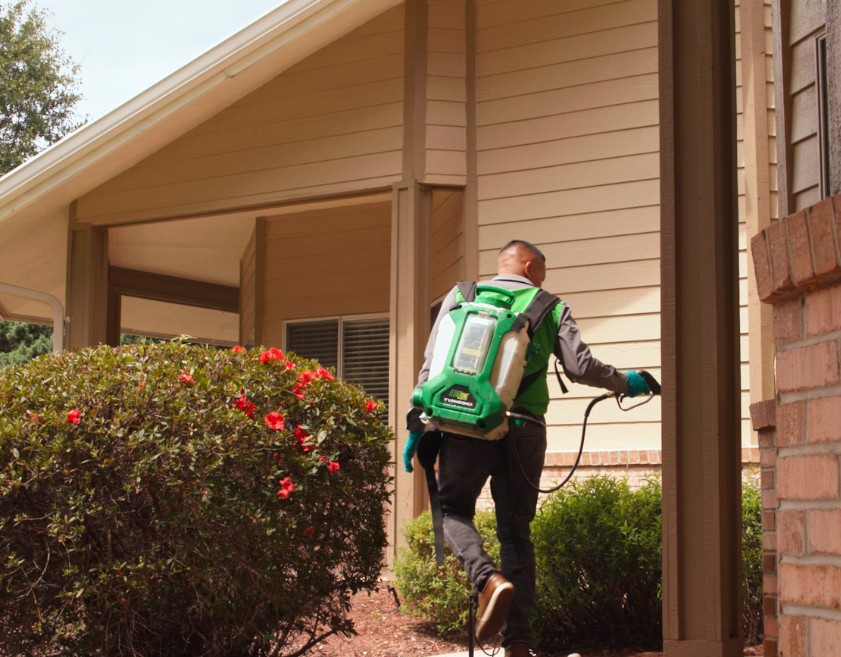
Lives & Breeds Indoors

House centipede

The one people actually call about. Its body is about 1 to 1½ inches long, yellowish-gray with three dark stripes, carried on 15 pairs of long, banded legs.

Clemson notes the female's last pair of legs can be more than twice her body length, which is why they look so much bigger than they are. The house centipede has large compound eyes, moves very fast, and according to Clemson is the only centipede that can live and reproduce inside homes.

Ground Level Invader

Stone centipedes

Flattened, brown, about an inch long, with shorter legs. They live under rocks, logs, mulch and leaf litter and wander in through gaps at ground level, especially in spring and fall.

They don't survive long indoors due to normal air dryness.

Subterranean Garden Dweller

Soil centipedes

Long, thin, yellowish centipedes with many short legs, usually turned up while digging in garden beds or lifting pavers.

Mostly harmless and rarely seen inside.

Do Not Handle Barehanded

Eastern red & bark centipede

Larger, sturdier centipedes from the scolopendromorph group. The North Carolina Biodiversity Project lists both across the state: the eastern bark centipede (Hemiscolopendra marginata) from Piedmont counties such as Chatham, Orange and Wake, and the eastern red centipede (Scolopocryptops sexspinosus) from places as different as Chatham County and the Wilkes County foothills.

They live under bark, logs and leaf litter and occasionally turn up in garages, crawl spaces and woodpiles.

Precaution: These are the North Carolina centipedes most likely to bite if handled, so don't pick them up barehanded.
Evolutionary Background

A Little History: How the House Centipede Got Here

There's no special centipede story in Greensboro's past, but the house centipede itself has an interesting one. The University of Arkansas Arthropod Museum describes it as probably native to the Mediterranean region.

It spread into the United States from the southern states and Mexico, reaching Pennsylvania by 1849, New York by 1885 and Massachusetts around 1890, and it now lives across much of North America.

In other words, the centipede in your Greensboro bathroom belongs to a species that has lived alongside people in houses for well over a century. It has been following our cockroaches, silverfish and crickets for a long time.

Historical North American Migration:
Mediterranean Native Origin
1849 Pennsylvania
1885 New York
1890 Massachusetts
Present Day Piedmont NC Homes
Anatomical Identification

Centipede or Millipede?

People mix these up constantly, and they need different approaches.

Anatomical Trait
Centipede
Millipede
Legs per body segment One pair Two pairs
Leg length Long, especially on house centipedes Very short
Speed Very fast sprint Slow, steady crawl
When disturbed Runs for dark voids & cracks Curls into a "C" or tight coil
Diet Carnivore: Hunts insects and spiders Herbivore: Eats decaying plant material
Bite Risk Can bite if handled barehanded Doesn't bite
NC State Extension Biological Guidance: NC State Extension notes millipedes don't bite, sting or spread disease and often invade homes in large numbers after very wet weather, during dry spells, or during fall migrations. If you're seeing dozens of slow, curling, dark brown critters on the patio after a heavy rain, those are millipedes, and we handle them too.
Local Piedmont Environmental Factors

Why Greensboro Homes Attract Centipedes

Humid summers

From June through September, Greensboro's average relative humidity sits in the low-to-mid 70s percent, and it climbs much higher overnight. House centipedes are built for that kind of muggy air, and so are the silverfish and crickets they hunt.

Vented crawl spaces

Many Greensboro homes sit on vented crawl spaces. Advanced Energy, a research group in Raleigh, measured crawl spaces in North Carolina homes and found the old wall-vented kind ran over 80% relative humidity through much of spring and summer. Sealed, closed crawl spaces in the same study held under 65%. A damp crawl space is a centipede nursery right under your floors.

Red clay that stays wet

Our slow-draining Piedmont clay keeps soil along the foundation damp after rain, which suits stone centipedes and the insects they hunt.

Mulch and pine straw against the house

Thick beds of mulch and pine straw stacked against brick and siding hold moisture and shelter centipedes right at the entry points. Ohio State recommends keeping leaf litter, wood, compost and stones at least 3 feet from the foundation.

Leaves stay on the property

The City of Greensboro doesn't allow loose leaves to be placed in the street or right-of-way, so leaves have to stay in the yard, go in a yard waste cart or be bagged in paper. Leaf piles left along the foundation through the fall become perfect centipede shelter.

Fall lawn watering

Tall fescue is the go-to lawn grass in the Piedmont, and NC State Extension's recommended seeding window for the Piedmont is September 1–15, followed by light watering two or three times a day while seed germinates. That's great for the lawn, but sprinklers soaking the soil along the foundation in September help explain why centipedes push indoors in fall. Clemson suggests keeping sprinklers away from the foundation.

On-Site Inspection Locations

Where We Find Centipedes Around Greensboro Homes
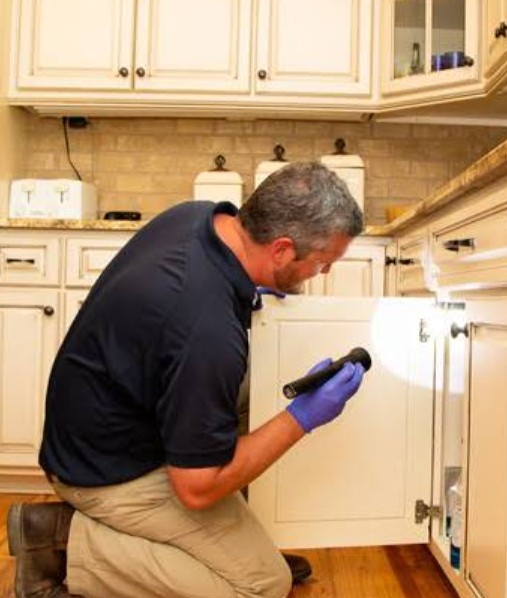
technician inspecting greensboro home for centipede
Licensed technician conducting moisture and void inspection in Greensboro, NC
🏠

Inside

Bathrooms (under vanities and behind tubs), laundry rooms, basements, closets on outside walls, storage rooms with boxes on the floor, and anywhere near a slow plumbing leak.

🧱

Underneath

Crawl spaces with torn or missing vapor barriers, standing water or damp insulation.

🚪

At the edges

Window wells, door thresholds, gaps under garage doors, foundation cracks and expansion joints.

🌲

Outside

Under mulch, pine straw, stones, landscape timbers, firewood stacks, stored lumber and leaf piles.

By Home Type Across Greensboro Neighborhoods

Fisher Park · Westerwood · College Hill

Early-1900s homes: Often have damp partial basements and older plumbing, which suit house centipedes.

Starmount · Lindley Park · Hamilton Lakes

Older brick houses: Often have older plastic on the crawl space floor that's torn, bunched up or missing in spots, plus foundation vents that pull in humid summer air.

Lake Jeanette · Brassfield · Adams Farm

Newer construction homes: Tend to have heavy mulch beds, irrigation systems and finished basements or bonus rooms where stone centipedes and house centipedes wander in.

Health & Medical Facts

Are Centipedes Dangerous?

For most people, no. Clemson Cooperative Extension says bites from centipedes found in the United States are not deadly to adults or children, the jaws of smaller species are too weak to break human skin, and a bite is comparable to a wasp sting unless someone is highly allergic.

Centipedes don't carry serious diseases or damage food or belongings. The University of Arkansas Arthropod Museum describes the house centipede as non-aggressive, with jaws too weak to easily break skin, biting only in self-defense.

MedlinePlus First Aid Protocol If Bitten:
  • Wash the area thoroughly with gentle soap and warm water.
  • Apply ice wrapped in a clean cloth (10 minutes on, 10 minutes off).
  • Call 911 immediately for trouble breathing, a racing heartbeat, or swelling of the throat.
  • Reach Poison Control 24/7 at 1-800-222-1222 for clinical guidance any time.
Handling Precaution: The real risk comes from handling the bigger outdoor centipedes, so wear gloves when moving firewood, lumber, stones and stored items.
Ecological Balance

Should You Kill a House Centipede?

It's a fair question. House centipedes eat cockroaches, silverfish and other pests, and some homeowners are happy to leave a few alone in the basement.

But most people don't want them running across the bedroom floor, and a growing centipede population usually means a growing insect population too.

Our Management Philosophy: Our goal isn't to wipe out every centipede in the yard. It's to keep them in the mulch where they belong and fix whatever keeps inviting them indoors.
✔ Mulch & Yard: Natural beneficial predators
✖ Bedrooms & Vanities: Unacceptable indoor infestation
Targeted 8-Step System

How Our Centipede Service Works

From rapid downtown dispatch to soil-level perimeter barriers and moisture correction.

01

We come out quickly

We hold ourselves to a one-hour arrival time for Greensboro addresses.

02

We identify what you've got

House centipede, stone centipede, a larger outdoor species or a millipede each points to something different.

03

We inspect for moisture and prey

We check bathrooms, laundry areas, basements and the crawl space for dampness, and look for the silverfish, cockroaches, crickets and spiders the centipedes are hunting. Sticky monitors help show where activity is heaviest.

04

We treat from the outside in

Ohio State Extension recommends a band of treatment 18 to 36 inches wide around the foundation and notes granular formulations often last longer than sprays. We treat that perimeter, along with entry points, window wells and crawl space vents. When mulch is involved, we make sure the treatment actually reaches the soil underneath.

05

We treat dry voids inside, carefully

Clemson notes boric acid dust in cracks, crevices and wall voids can work indoors, but many dusts don't hold up in damp areas, so we place them where they'll stay effective. We don't use bug bombs, which Ohio State calls ineffective against centipedes.

06

We go after their food

If silverfish, crickets or cockroaches are feeding the centipedes, we treat those too.

07

We give you a moisture and exclusion list

Gaps to seal, door sweeps to add, mulch to pull back, and damp areas to dry out, written so you can tackle them yourself or hand them to a contractor.

08

We follow up

Outdoor perimeter treatments may need repeating through the warm months, and we check the monitors to make sure activity is dropping.

Piedmont Annual Cycle

Greensboro's Centipede Seasons

🌱 Spring Egg Laying & Emergence

As the weather warms, centipedes become active and some move indoors. Ohio State notes female centipedes lay eggs in spring in moist, hidden spots, and eggs can take up to three months to hatch.

☀️ Summer Peak Crawl Space Humidity

Humidity is high, crawl spaces are damp, and house centipedes and their prey are at full activity across Greensboro homes.

🍂 Fall Indoor Invasion Peak

Ohio State notes centipedes move indoors in spring and fall when outdoor conditions turn unfavorable. In Greensboro, fall also brings leaf piles, fresh lawn seed and heavy watering along foundations, so it's peak season for indoor sightings.

❄️ Winter Indoor Hunting Continues

Outdoor species slow down, but house centipedes keep hunting in warm basements, bathrooms and laundry rooms all winter.

Actionable Prevention

Your Checklist for Fewer Centipedes

💧

Dry things out

  • Run bathroom fans during and after showers.
  • Use a dehumidifier in basements and damp rooms.
  • Fix dripping faucets, leaky drains and AC condensate lines that drip by the foundation.
  • Check the crawl space for a complete vapor barrier and standing water.
🏡

Clear the foundation

  • Keep leaves, firewood, stones, boards and compost at least 3 feet from the house.
  • Pull mulch and pine straw back from siding and brick, or use a strip of gravel.
  • Point sprinklers away from the foundation, especially during fall seeding.
  • Clean gutters and extend downspouts away from the house.
🚪

Seal the gaps

  • Add door sweeps and fix worn weatherstripping.
  • Seal foundation cracks, expansion joints and openings around pipes.
  • Make sure window wells drain and have covers if needed.
📦

Inside

  • Move storage boxes off the floor and away from walls, or switch to sealed plastic bins.
  • Reduce clutter in basements, garages and closets.
  • Vacuum up centipedes you find indoors.
Local Pest Q&A

Centipede Questions From Greensboro Homeowners

Clear, honest answers about house centipedes, moisture biology, health risks, and professional eradication.

Why do I keep seeing centipedes in my bathroom?

Bathrooms are humid and often have gaps around pipes leading into walls and crawl spaces. Centipedes follow the moisture and the small insects that live there.

Will centipedes infest my house?

Most outdoor centipedes can't survive long indoors. House centipedes can live and breed inside, but only where there's enough moisture and prey.

Can a centipede bite hurt me?

Bites are uncommon and usually feel like a bee or wasp sting. Wash the area, apply ice and contact Poison Control at 1-800-222-1222 if you're concerned. Call 911 for any sign of an allergic reaction.

Are centipedes good to have around?

Outdoors, yes. They eat a lot of pests. Indoors, they're a sign of dampness and other insects, which is worth fixing.

Why are there more centipedes in the fall?

Centipedes move indoors in spring and fall as outdoor conditions change. In Greensboro, fall leaf cover and heavy lawn watering near the foundation add to it.

Is it a centipede or a millipede?

Centipedes have one pair of legs per segment and run fast. Millipedes have two pairs per segment, move slowly and curl up when disturbed.

Do store-bought sprays work?

They kill the centipede you hit but don't fix the moisture, entry points or prey. Ohio State notes bug bombs are ineffective against centipedes.

Is centipede treatment safe around children and pets?

Most of our work is outside, around the foundation. Indoor products go into cracks and voids, not open surfaces, and everything is EPA-registered and applied according to the label. We'll explain any precautions before we start.

How long until I stop seeing them?

Activity usually drops within a couple of weeks after treatment. Lasting results depend on drying out damp areas and controlling the insects they feed on.

Greensboro Centipede Control Dispatch: Have a question about your home's moisture levels or crawl space dampness? Our local technicians work out of 200 N Greene St, downtown Greensboro.
Scroll to Top