

Ant Control in Greensboro, NC — Ant Exterminators Who Go After the Colony
Kitchen trails after a summer storm, fire ant mounds in the lawn, sawdust under a window sill. Whatever kind of ants you're dealing with, Greensboro Insect Pros identifies the species, finds the colony and removes it at the source, then helps you keep ants from moving back in.
From First Call to Ants Removed: Our 60-Minute Response
You reach a local person
Contact us and you talk to our downtown office, not a national call center. We ask what the ants look like, where the trail is, whether they sting, and whether you’ve seen sawdust or winged ants. That helps us send the right technician with the right products.
A licensed technician is at your door within 60 minutes
Our 60-minute response covers every neighborhood in the city, from Lake Jeanette in the north to Adams Farm and Grandover in the southwest and McLeansville to the east.
We identify the ant and find the colony
We follow trails back to where they enter and where they nest. That means checking kitchens and bathrooms, window and door frames, the foundation, mulch beds, the crawl space or slab edges, gutters, tree limbs touching the roof, and the lawn.
Treatment starts on the same visit
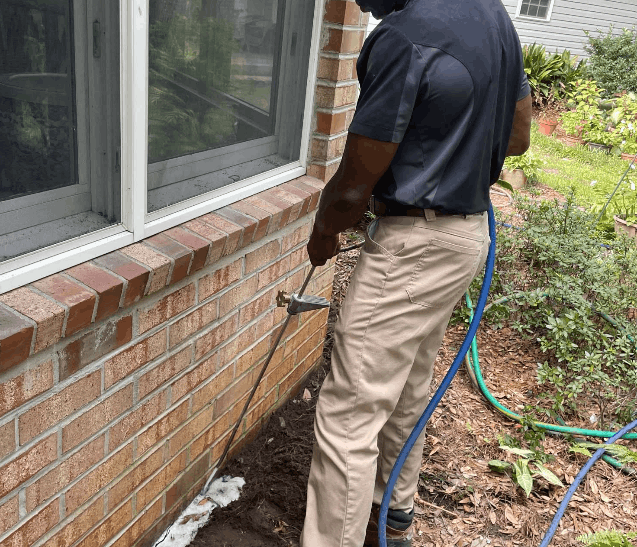
Inside, we place baits and non-repellent treatments where ants travel and feed. Outside, we treat the perimeter, entry points and nests. Fire ant mounds are baited, and carpenter ant nests are treated directly once we locate them.
We follow up until the ants are gone
Bait needs time to reach the queen. You may see more ants for a few days while they feed and carry it home, then activity drops sharply. We check back, adjust treatment where needed, and stay with it until the colony is gone.
How We Get Rid of Ants
Whether you call it ant control, ants removal or extermination, the goal is the same: the colony is gone, not just the trail. Our ant pest control follows Integrated Pest Management: identify the species, find the colony, treat precisely, remove what's attracting ants and keep checking. Here's how that plays out for each type of ant.
Trailing ants in kitchens and bathrooms (odorous house, little black, Argentine) Kitchens & Bathrooms
- Species-matched baits: Some ants want sugar, others protein or grease, and preferences shift through the season. We match the bait to what your ants are eating right now.
- Non-repellent perimeter treatments: Ants can't detect them, so they walk through, pick up the product and share it with the colony instead of detouring around it.
- Nest treatment in mulch beds: Under landscape stones and in wall voids when we can locate them.
- Entry point treatment: At door thresholds, window frames, plumbing penetrations and utility lines.
Carpenter ants Structural Wood Safeguard
- Finding the nest: We look for sawdust piles, slit-like openings, rustling sounds in walls and nighttime foraging routes, and check damp wood around windows, decks, porches and rooflines.
- Direct nest treatment: With dusts or foams into galleries and wall voids.
- Baits for nests we can't reach: NC State Extension notes carpenter ant baits typically take 7 to 10 days to work.
- Exterior treatment of the parent colony: Often in a stump, tree or woodpile nearby.
- Moisture findings: Carpenter ants prefer wood with high moisture, so we show you leaks, rotted trim and gutter problems that need repair.
Fire ants NC Quarantine Zone Treatment
- Two-step method: Broadcast or mound-specific bait first, then a direct mound treatment a few days later for surviving colonies.
- Timing matters: NC State Extension recommends treating when temperatures are between about 70 and 85°F, when ants are foraging actively. Spring and fall are the best windows here.
- Protecting high-risk areas: Like play areas, walkways, AC pads and pet runs.
Pharaoh ants Strictly Bait Only
- Baits only: No sprays, which cause colonies to split and spread through a building.
- Coordinated treatment across connected units: In apartments and multi-family buildings.
Asian needle ants Habitat-Focused Protocol
- Habitat-focused treatment: In mulch, logs, stumps and leaf litter, since trail baits often don’t work on them.
- Harborage reduction recommendations: To remove the damp, sheltered spots they nest in.
Why Greensboro Chooses Us for Ant Control
Licensed by the State of North Carolina
Ant control is household pest work regulated by the NCDA&CS Structural Pest Control and Pesticides Division. Our work is done under a state structural pest control license by technicians trained and credentialed to apply professional products correctly.
Fully insured
Every visit is covered by our liability insurance, protecting your home and property.
60-minute response across Greensboro
A licensed technician at your door within 60 minutes of your call, anywhere in the city. A fire ant mound by the swing set or ants pouring out of a wall shouldn't wait until next week.
Local pros, not a call center
We’re a Greensboro team based at 200 N Greene St. We know how our red clay floods ant colonies after a storm, which older neighborhoods have damp window sills and porch framing, and where fire ant mounds pop up every spring.
Long-term prevention
Knocking down a trail is easy. Keeping ants from coming back takes colony-level treatment, follow-up, and fixing the moisture, mulch and entry points that invite them in. That’s what our prevention plans do.
Signs You Have an Ant Problem
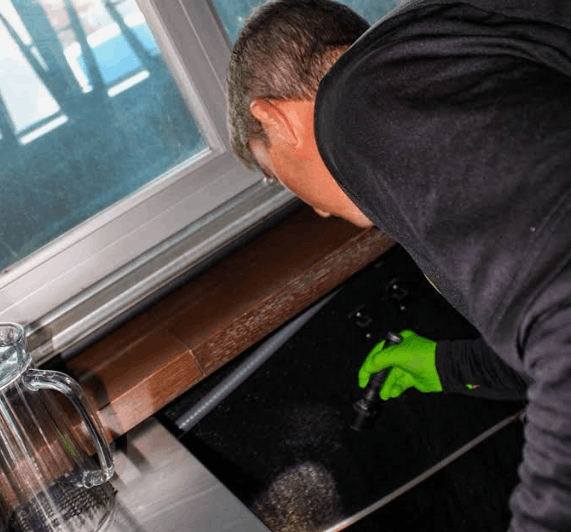
- Trails of ants along counters, baseboards, window sills or door frames, especially to sweets, pet food or trash.
- Ants appearing right after heavy rain, usually odorous house ants flooded out of the soil.
- A rotten-coconut smell when you wipe up or crush ants: odorous house ants.
- Large black ants inside at night, particularly in kitchens and bathrooms: carpenter ants.
- Piles of coarse sawdust mixed with insect parts under window sills, trim, baseboards or in the attic.
- Faint rustling or crackling in walls or ceilings, which can mean a carpenter ant nest.
- Winged ants indoors, especially near windows in spring. That often means a nest inside the structure.
- Small soil or sand piles in slab cracks, driveway joints or between pavers: pavement ants.
- Dome-shaped dirt mounds in the lawn with no visible entrance hole that erupt with ants when disturbed: fire ants.
- Ants coming out of outlets, light switches or AC units.
Why Ants Are More Than a Nuisance
Stings and allergic reactions
Medical AlertFire ant stings form painful, itchy pustules, and a small percentage of people have serious allergic reactions. Asian needle ant stings are also painful, and NC State Extension notes children, older adults and people with weakened immune systems may be at greater risk of reactions. Anyone with trouble breathing, swelling of the face or throat, or dizziness after a sting needs emergency care.
Risk to kids and pets
Lawn & Play SafetyFire ant mounds show up in sunny yards, playgrounds and pet areas, and small children and pets often stumble into them before anyone notices.
Structural damage
Structural Wood RiskCarpenter ants hollow out wood to build nests. Over time, that can weaken window frames, porch framing, sill plates and roof edges, and it usually signals a moisture problem that’s damaging the wood too.
Food contamination
Kitchen SanitationAnts walk from trash, drains and outdoors straight to your counters and pantry. Pharaoh ants in particular have been linked to carrying bacteria in hospitals and other buildings.
Damage to equipment
HVAC & ElectricalFire ants can nest inside AC units, electrical boxes, pool pumps and outdoor electrical equipment, causing shorts and costly repairs.
Flying Ants or Termites? How to Tell
Spring brings both flying ants and termite swarmers in the Triad, and they look alike at first glance. The difference matters: termites need a termite treatment, not an ant treatment.
| Feature | Flying ant | Termite swarmer |
|---|---|---|
| Waist | Pinched, narrow waist | Broad, straight waist |
| Antennae | Bent or elbowed | Straight, bead-like |
| Wings | Front wings longer than back wings | All four wings about the same length |
| Wings after landing | Usually stay attached | Break off easily, leaving piles of wings |
Not sure? Save a few in a zip-top bag or take a close photo and show your technician. We treat both, and we’ll tell you exactly what you have.
What Local Weather and Soil Do to Ants
Heavy summer storms flood colonies
Greensboro averages about 45 inches of rain a year. When storms saturate the soil, odorous house ants and other soil-nesting ants move their colonies, and your kitchen is often the closest dry spot.
Red clay holds water
Our slow-draining Piedmont clay stays wet around foundations after rain, pushing ants toward the house and keeping sill plates and crawl space framing damp enough for carpenter ants.
Clay shapes fire ant mounds
NC State Extension notes fire ant mounds in clay soils tend to be symmetrical and dome-shaped, which is what you'll see in lawns across Guilford County.
Long, hot summers keep colonies growing
With July highs near 89°F, ant colonies forage and reproduce from spring well into fall.
Mild winters don't kill them off
January lows average around 30°F with short freezes, so colonies survive under slabs, inside walls and deep in soil, and indoor ants stay active in heated homes.
Big old trees feed carpenter ants
Mature oaks and maples with dead limbs, hollow trunks and branches touching roofs give carpenter ants a nest site and a bridge into your attic.
Which Ants Show Up in Which Greensboro Homes
Historic homes
Fisher Park, Westerwood, College Hill, Irving Park, Sunset HillsEarly-1900s homes with original wood windows, porches and crawl spaces, under big old trees. Carpenter ants and acrobat ants in damp framing and window sills are the main concern, along with odorous house ants in the kitchen.
Mid-century brick ranches
Starmount, Lindley Park, Hamilton LakesMature oaks over the roof, mulch piled against brick and older gutters. Expect odorous house ants trailing in after storms and carpenter ants moving from tree limbs into the attic.
Newer subdivisions
Lake Jeanette, Brassfield, Adams Farm, GrandoverSlab foundations, deep mulch beds, irrigated lawns and sunny common areas. Pavement ants coming through slab expansion joints, odorous house ants in the kitchen, and fire ant mounds in lawns and along sidewalks.
Apartments, townhomes and student housing
Near UNCG, NC A&T and Guilford CollegeShared walls and plumbing let trailing ants and pharaoh ants move between units. Coordinated treatment across connected units gets the best results.
Homes on wooded lots
Near the watershed lakes, Summerfield and Oak RidgeStumps, logs, woodpiles and leaf litter support carpenter ants and Asian needle ants, while sunny clearings and pastures host fire ants.
Greensboro's Ant Calendar

Spring (March–May)
First Swarms & Lawn MoundsColonies wake up and ants start foraging indoors. Pavement ants and carpenter ants swarm, and fire ant mounds become visible in lawns. One of the two best times to treat fire ants.
Summer (June–August)
Peak Storm ActivityPeak season. Storms flood colonies and send odorous house ants indoors, carpenter ants forage at night, and fire ant colonies expand across lawns.
Fall (September–November)
Pre-Winter Indoor PushColonies stock up before winter and push indoors as nights cool. Fall is the second best window for fire ant treatment.
Winter (December–February)
Indoor Void NestingOutdoor colonies slow down, but ants nesting in walls, under slabs or near heat sources keep going. Seeing ants indoors in winter usually means a nest inside the structure.