

Termite Control in Greensboro, NC Termite Treatment
Termites don't announce themselves. By the time you see swarmers on a windowsill or mud tubes in the crawl space, a colony may have been feeding for years. Greensboro Insect Pros inspects your home top to bottom, explains exactly what we find, and puts a termite treatment and protection plan in place that fits your foundation, your soil and your budget.
Termites in Greensboro: What You're Dealing With
Eastern Subterranean Termites
Nearly every termite problem in Greensboro comes from one species: the eastern subterranean termite, the most common and destructive termite in North Carolina. These termites live in the soil and travel up into your home through cracks, expansion joints, hollow block walls and mud tubes they build over foundations.
What makes them so costly is scale and patience. NC State Extension notes that a mature colony often holds around 300,000 termites and can reach several million. They forage across an area up to about a third of an acre and regularly travel up to 200 feet from the nest. They eat anything made of cellulose: framing, subfloors, sill plates, trim, drywall paper, cardboard and stored books. Because they stay hidden inside wood and behind walls, serious structural damage usually builds over several years before anyone notices.
What about Formosan and drywood termites?
Formosan termites, the aggressive species that makes the news in the Gulf states, have only been found in a few isolated spots in North Carolina, and NC State Extension reports none in Guilford County. Drywood termites are also uncommon here and usually arrive in infested furniture or wood from out of state. If we ever find either, we'll tell you plainly and treat accordingly.
Other wood-destroying insects we check for
A full termite inspection also looks for powderpost beetles, old house borers and carpenter ants, since all three damage wood in Greensboro homes and all three show up on North Carolina's official real estate inspection form.
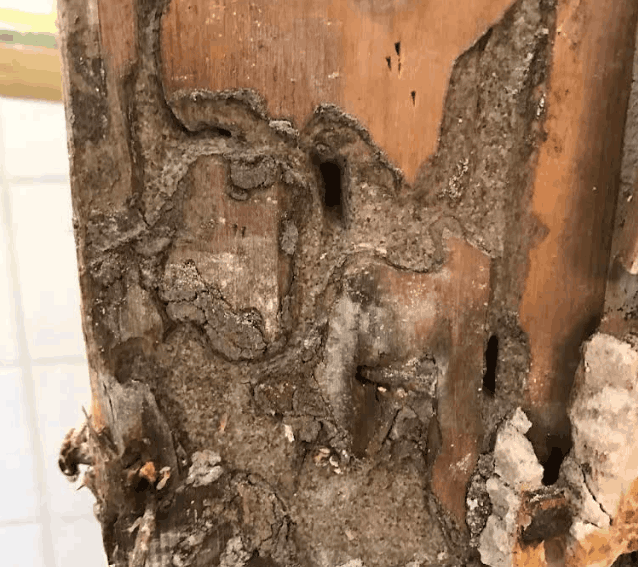
Structural wood honeycombing & mud tube feeding channels documented inside a local Greensboro crawl space.
Greensboro Termite Fast Facts
- Colony Size: 300,000 to 2,000,000+ subterranean workers
- Foraging Radius: Up to 200 feet from underground central nest
- High Risk Zones: Crawl spaces, sill plates, wood-to-soil foundation contacts
From First Call to Termites Gone: How Our Service Works
Our 60-minute response covers every Greensboro neighborhood, whether you're in an old Fisher Park bungalow or a newer home out by Lake Jeanette.
1. You talk to someone local
Contact us and you reach our downtown office. Tell us what you've seen (swarmers, wings, mud tubes, soft wood) and we'll send a termite technician straight out.
2. A licensed technician arrives within 60 minutes
Our 60-minute response covers every Greensboro neighborhood, whether you're in an old Fisher Park bungalow or a newer home out by Lake Jeanette.
3. We inspect the whole structure
We check the crawl space or slab edges, foundation walls, piers, sill plates, porches, decks, garages, attic, plumbing penetrations, bath traps, and the exterior grade and mulch line. We probe and sound wood, look for mud tubes, frass and wings, and note moisture problems and wood-to-soil contact that invite termites.
4. You get a clear written report and plan
We show you what we found, with photos when possible, explain your treatment options side by side, and put the plan and any warranty terms in writing before work starts. If any part of the structure can't be treated to North Carolina's standard, we explain that in writing too.
5. We treat
Depending on your home and the option you choose, treatment may start the same day or be scheduled at a time that works for you. A typical liquid treatment for an average home takes most of a day. Bait stations are installed in a single visit.
6. We confirm the colony is gone and keep watching
Non-repellent liquid products spread through the colony over weeks, and bait systems take longer still. We come back to confirm activity has stopped, then inspect every year to keep your protection current.
Termite Treatment Options
There's no single best termite treatment for every Greensboro home. The right choice depends on your foundation type, the size of the infestation, wells or water nearby, and how you want to handle long-term protection. The EPA and North Carolina's Structural Pest Control Division both recognize the options below.
Liquid termiticide barrier
We trench along the foundation and apply a non-repellent termiticide to the soil, inside and outside the foundation walls, and drill slabs, porches and patios where they meet the house. Termites can't detect the product, so they pass through it and carry it back, affecting others in the colony. North Carolina's standards call for a continuous barrier along the foundation, with trenches at least 6 inches deep and treatment reaching a depth of at least 30 inches where the foundation allows.
Termite bait systems
We install monitoring stations in the soil around the house. Once termites find a station, we load it with a bait containing a slow-acting growth regulator. Workers share the bait through the colony, and over time the colony collapses. Bait systems use far less product in the soil but need regular monitoring and maintenance to keep working.
Combination treatment
For heavy infestations, we can use liquid treatment where termites are active plus bait stations for ongoing colony pressure around the rest of the house.
Direct wood and void treatments
Foams and dusts go straight into infested wood, wall voids and hollow block foundations to reach termites where a soil barrier can't. Borate wood treatments soak into bare wood in crawl spaces and attics to protect it from future feeding.
Pre-construction treatment
For new homes, additions and sunrooms, we provide pre-construction termite treatment to North Carolina's standards for buildings under construction, including the required treatment label posted at the meter base or breaker box.
Comparing your options
Side-by-side breakdown for Greensboro property owners
| Liquid barrier | Bait system | Combination | |
|---|---|---|---|
| How it works | Treated soil zone termites pass through | Stations termites feed on and share | Both |
| Speed on an active infestation | Fast | Slower | Fast |
| Soil disturbance | Trenching and drilling | Small holes for stations | Both, targeted |
| Ongoing upkeep | Annual inspection | Regular station checks | Both |
| Good near wells or water | Limited | Yes | Case by case |
Why Homeowners Choose Us for Termite Control
Licensed for wood-destroying organisms
North Carolina licenses termite work separately from general pest control, under the wood-destroying organism phase. Our termite work is done under a state structural pest control license by technicians trained in North Carolina's minimum treatment standards.
Insured on every job
Trenching, drilling and treating around a foundation should never put your home at risk. Our liability coverage protects your property on every visit.
60-minute response in every neighborhood
A technician can be at your door within the hour to look at swarmers, mud tubes or damage, and start the inspection that day.
A local team that knows local houses
Our office is at 200 N Greene St. Our technicians know where termites tend to get into local homes: the settled brick piers in older in-town houses, the porch slabs added onto mid-century ranches, and the mulch piled against brick in newer subdivisions.
Protection that lasts
Treatment is the start. Yearly inspections, written warranty terms and moisture recommendations keep your home protected long after the first visit.

Signs of Termites in Your Home
Subterranean termites feed silently inside framing and subfloors. Watch for these 9 warning indicators across your foundation, windowsills, and crawl space.
Swarmers indoors, especially near windows, doors and light fixtures in spring. NC State Extension notes indoor swarmers point to an active infestation in the structure.
Piles of discarded wings on windowsills, floors or trapped in spider webs.
Mud tubes about the width of a pencil on foundation walls, piers, pipes, crawl space framing or inside the garage.
Wood that sounds hollow or gives way when probed or pressed firmly with a screwdriver.
Bubbling or blistering paint, or baseboard and wall trim that looks water-damaged without an active plumbing leak.
Sagging floors or interior doors and window sashes that suddenly begin sticking in their frames.
Tiny pinholes in drywall or faint trailing lines visible across interior wall surfaces.
Damaged cardboard, books or paper stored in basements, crawl spaces or attached garages.
Mud or dirt packed into foundation slab cracks, expansion joints, drywall seams or woodwork.
What Termites Cost You If Left Alone
Structural damage
Termites eat framing, subfloors, sill plates and joists from the inside out. NC State Extension estimates serious structural damage takes several years of continuous feeding, which is exactly why yearly inspections catch problems before they become repairs.
Insurance usually won't help
Standard homeowners insurance policies treat termite damage as gradual and preventable, so it generally isn't covered. Termite repairs, and the treatment itself, typically come out of your pocket.
Trouble when you sell
Almost every North Carolina home sale includes a wood-destroying insect inspection. Active termites or untreated damage can delay closing, lower your sale price or send buyers elsewhere.
Hidden secondary problems
Termite damage often sits next to moisture problems, such as a leaking pipe, poor crawl space drainage or rotted sill plate, that cause their own damage and mold.
Termite Swarmers or Flying Ants?
Both swarm in the Triad in spring, and people mix them up all the time. A few quick checks:
| Body Feature | Subterranean Termite | Flying Ant |
|---|---|---|
| Waist | Thick, straight uniform body (no pinched waist) | Narrow, distinctly pinched waist |
| Antennae | Straight, bead-like antennae | Bent or elbowed antennae |
| Wings | All 4 wings are equal length and break off easily | Front wings are noticeably longer than back wings |
Why Greensboro Homes Face High Termite Pressure
North Carolina sits in the USDA heavy termite pressure zone. In Greensboro and Guilford County, local soil biology, moisture patterns, and regional weather create ideal conditions for subterranean colonies.
Red clay that holds water
Our Piedmont clay drains slowly, so soil along foundations stays damp for days after rain. Subterranean termites need that moisture to survive and forage.
About 45 inches of rain a year
Frequent rain keeps soil moist across all four seasons, and poorly graded yards send water toward foundations instead of away from them.
Humid summers
Summer humidity often sits in the mid-70s percent, and damp crawl spaces give termites a comfortable route into floor framing.
Mild winters
With January lows around 30°F and short freezes, colonies stay active deep in the soil and resume feeding early. Warm spells in late winter can even trigger swarms inside heated homes.
Big trees and old stumps
Mature oaks and maples, stumps left after storms or clearing, and wood scraps buried during construction all feed colonies near the house.
Mulch and landscaping
Deep mulch piled against brick keeps soil damp and hides termites crossing from the ground into siding and trim.
Termite Risk by Greensboro Home Type
Early-1900s homes — Fisher Park, Westerwood, College Hill, Irving Park, Sunset Hills
Wood porches, original sills, brick piers that have settled over a century, and crawl spaces that run damp all summer. These homes often show old termite damage from past infestations, so we look closely at whether activity is current. Renovations and additions can also break an old treatment barrier.
Mid-century brick ranches — Starmount, Lindley Park, Hamilton Lakes
Vented crawl spaces, aging vapor barriers, porches and patios poured against the house, and big shade trees. Slabs added later create hidden entry points where the patio meets the foundation.
Newer homes — Lake Jeanette, Brassfield, Adams Farm, Grandover
Many were treated during construction, but construction-era soil treatments don't last forever, and later landscaping, decks and additions can bypass them. Slab homes are harder to inspect, which makes annual professional checks more important.
Homes on wooded lots and private wells — Summerfield, Oak Ridge and near the watershed lakes
Stumps, woodpiles and buried roots feed large colonies nearby. Homes on private wells need extra care because termiticide labels restrict soil treatment near wells, which often makes bait systems the better fit.
Downtown and commercial buildings
Older masonry buildings with wood framing, plus basements and utility openings, need inspections that cover structural voids, not just the exterior.
Greensboro's Termite Year
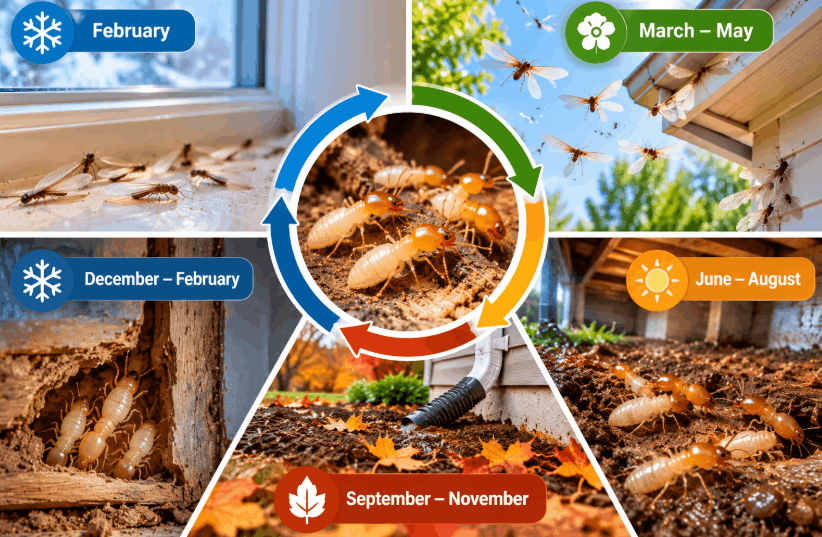
Subterranean activity patterns mapped across Piedmont North Carolina temperature shifts.
A warm spell can trigger early swarms, usually inside heated homes where the colony is already in the structure.
Peak swarm season in the Triad, typically on warm, sunny days after rain. The most common time homeowners discover termites.
Colonies forage hard in warm, moist soil. Swarms taper off but feeding continues, and humid crawl spaces stay attractive.
Feeding continues until soil cools. A good time to fix drainage and crawl space moisture before winter.
Colonies move deeper in the soil but don't die off. Termites already inside a heated structure can keep feeding all winter.